
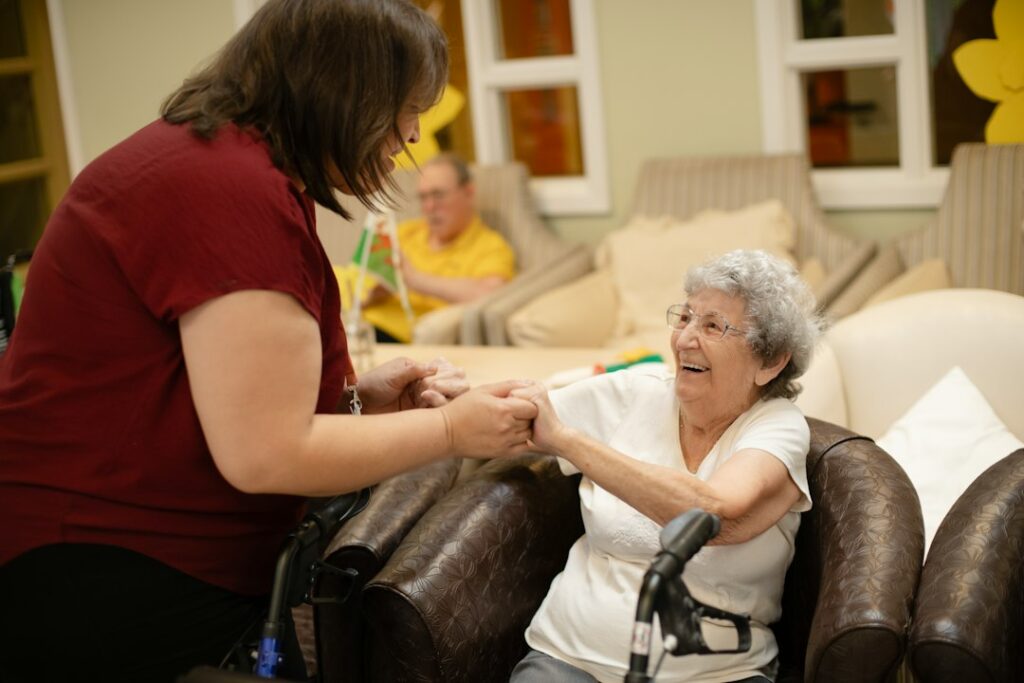
What does assisted living staff do each day?
Assisted living staff help residents remain as independent, safe, and engaged as possible while providing support with everyday needs. Their work may include personal care, meals, medication routines, transportation coordination, housekeeping, activities, communication with families, and response to changing health or safety concerns.
The exact services vary by residence and by each resident’s support plan. A person may need only reminders and occasional assistance, while another may require regular help with bathing, dressing, mobility, eating, or managing appointments.
Staff commonly include:
- Caregivers who assist with daily routines
- Medication aides or other authorized personnel
- Nurses or visiting health professionals, depending on the residence and the resident’s needs
- Activity staff
- Dining, housekeeping, maintenance, and administrative staff
- Supervisors who coordinate care and respond to concerns
Assisted living is not the same as a hospital or nursing facility. Staff provide support and supervision, but they may not be equipped to manage every medical condition or level of skilled nursing care.
How do staff help with personal care?
Personal care support is one of the most visible parts of assisted living. Staff may help residents bathe, dress, groom, use the toilet, move between rooms, or prepare for bed.
Good assistance is not meant to take over tasks unnecessarily. Staff should encourage residents to do whatever they can safely manage. For example, a resident may choose clothing independently but need help with buttons, shoes, or balance. Another person may be able to shower alone but need someone nearby for safety.
Respect and privacy matter during these routines. Residents should be treated courteously, informed before assistance is provided, and allowed reasonable choices about timing and personal preferences.
How are medications handled?
Medication support may include reminders, storing medications securely, assisting with administration when permitted, and documenting whether a dose was taken. The specific process depends on state rules, the residence’s policies, and the medication orders from a prescriber.
Families often assume that staff automatically manage every medication detail. That is not always the case. Some residents may self-administer medications, while others need more direct help. A clear assessment should explain:
- Which medications staff will handle
- Whether prescriptions must be provided in a particular format
- How missed or refused doses are addressed
- Who contacts the prescriber about side effects or changes
- How over-the-counter medications and supplements are managed
Residents and families should ask who is responsible for refills, pharmacy communication, medication changes, and follow-up after a hospital visit.
How do staff support meals and nutrition?
Staff help make sure residents have regular access to meals, snacks, and fluids. Support may involve reading menus, accommodating food preferences, observing eating patterns, opening containers, or assisting someone who has difficulty using utensils.
Changes in appetite can be an early sign of illness, depression, dental problems, medication side effects, or difficulty chewing or swallowing. Staff who notice a pattern may report it to a supervisor or health professional so the concern can be evaluated.
In a community such as Mountville, seasonal weather can also affect routines. Hot summer days may increase the need for hydration, while winter conditions may make grocery trips, family visits, or outdoor activities less predictable. Staff planning should account for these practical changes rather than treating meals and wellness as separate concerns.
How do staff promote independence?
Supportive staff do more than complete tasks. They help residents maintain skills, make choices, and participate in daily life.
Independence may involve choosing when to wake up, deciding which activities to attend, managing personal belongings, helping set a table, or taking part in a familiar hobby. Staff can provide cues, adaptive equipment, extra time, or supervision without unnecessarily restricting the resident.
A common misconception is that needing assistance means giving up control. In a well-organized setting, the goal is usually to match the amount of help to the person’s current abilities. Support may increase temporarily after an illness and decrease again after recovery.
What happens if a resident’s needs change?
Staff monitor changes in mobility, memory, mood, sleep, appetite, continence, and behavior. They may notice that a resident is falling more often, becoming unusually confused, avoiding meals, or having trouble completing a task that was previously manageable.
These observations should be communicated through the residence’s care planning process. A change may lead to:
- An updated support plan
- A medication review
- A recommendation for physical or occupational therapy
- A visit with a physician or other health professional
- Additional supervision or safety measures
- A discussion with the resident and designated family members

Families should not rely only on occasional visits to identify changes. Staff see residents across different times of day and may notice patterns that are difficult to observe during a short visit.
How do staff respond to emergencies?
Assisted living staff are expected to follow emergency procedures for situations such as falls, severe weather, fire alarms, power interruptions, medical emergencies, or the need to relocate residents.
Emergency support can include calling emergency services, providing first aid within staff training, gathering medication information, contacting designated family members, and helping residents move safely. Residents who use walkers, wheelchairs, oxygen, hearing aids, or other equipment may need individualized instructions.
This is especially relevant during winter storms, extreme heat, and power outages. Families can help by keeping contact information current and making sure staff know about changes in mobility, communication needs, emergency contacts, and medical equipment.
How do staff communicate with families?
Staff communication may include routine updates, care conferences, incident reports, medication changes, and notices about appointments or changes in a resident’s condition. The resident’s privacy preferences and legal permissions determine what information can be shared.
Families should ask how communication works before a problem occurs. Useful questions include:
- Who is the main contact for care concerns?
- How are falls, injuries, or significant changes reported?
- How quickly are families notified?
- Who explains changes to the service plan?
- What should a family member do if a concern is not resolved?
Residents also have a direct role in communication. They should be encouraged to express preferences, report discomfort, ask questions, and participate in decisions about their support.
What are residents’ rights when receiving assistance?
Residents retain the right to dignity, privacy, respectful treatment, communication, personal choices, and freedom from abuse, neglect, intimidation, and unnecessary restraint. They should receive the services described in their agreement and care plan, subject to the residence’s rules and applicable regulations.
Assistance should never be used as a reason to ignore a resident’s voice. If a resident believes care is unsafe, disrespectful, or inconsistent with the agreed plan, the concern can be raised with the staff member involved, a supervisor, the administrator, or an appropriate outside advocacy office.
The most useful measure of staff support is not simply how many tasks are completed. It is whether residents receive reliable help while retaining as much choice, privacy, safety, and connection to everyday life as possible.
