
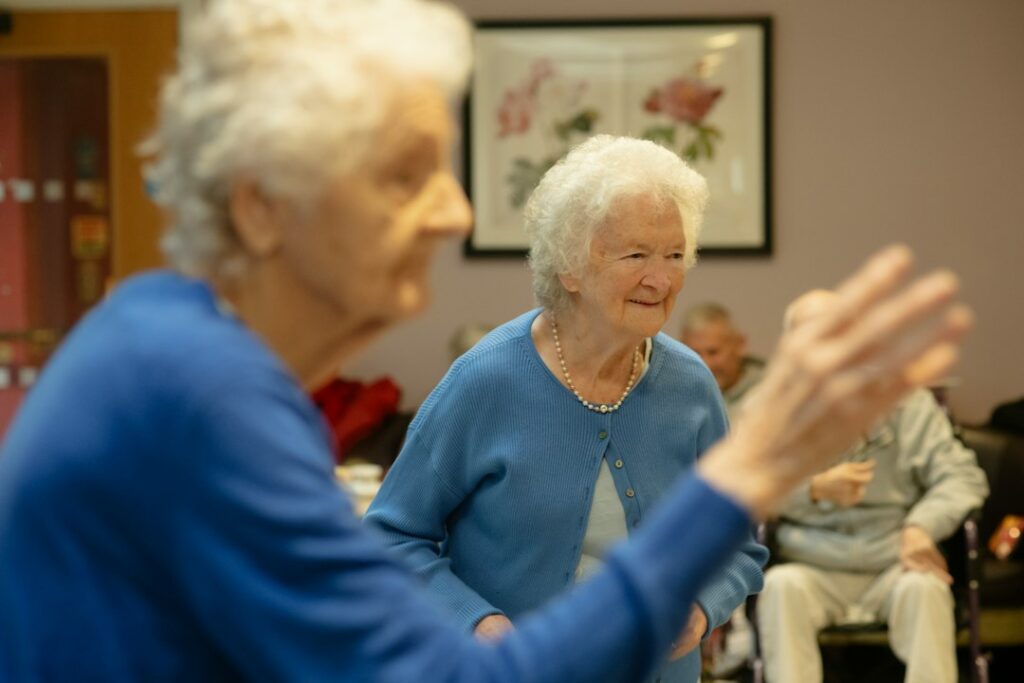
Assisted living activities are more than scheduled entertainment. They can support movement, memory, social connection, confidence, independence, and a sense of purpose. A well-planned recreation program gives residents choices throughout the day while recognizing that interests, abilities, energy levels, and comfort with group settings vary from person to person.
What types of activities are offered in assisted living?
Most assisted living communities provide a combination of social, physical, creative, educational, spiritual, and recreational activities. The schedule may include both structured events and informal opportunities for residents to spend time together.
Common examples include:
- Gentle exercise, stretching, walking groups, balance practice, and chair-based movement
- Card games, puzzles, trivia, bingo, and other familiar games
- Painting, crafts, gardening, music, baking, and seasonal decorating
- Book discussions, current-events conversations, history programs, and educational presentations
- Movie afternoons, live performances, sing-alongs, and listening sessions
- Religious or spiritual services, reflection groups, and holiday observances
- Birthday gatherings, coffee hours, family events, and community celebrations
- Indoor and outdoor social time, including patios, courtyards, and landscaped walking areas
Activities should not be judged only by how busy the calendar appears. A useful program includes options that are meaningful, accessible, and varied enough to serve residents with different interests and abilities.
How do activities benefit physical health?
Regular movement can help residents maintain strength, flexibility, balance, coordination, and endurance. It may also make everyday tasks—such as standing from a chair, walking to meals, or getting dressed—more manageable.
Exercise in assisted living is usually adapted rather than competitive. A class may include seated stretches, light hand weights, guided walking, or balance exercises near a stable surface. Residents do not need to be athletic to participate.
Outdoor recreation can offer additional benefits, including fresh air, natural light, and a change of scenery. In Mountville, seasonal conditions should be considered carefully. Hot, humid summer days, winter ice, and uneven outdoor surfaces may affect whether an activity is held outside. Indoor alternatives are useful when weather creates discomfort or fall risks.
Residents and families should ask whether activities can be modified for walkers, wheelchairs, limited vision, hearing loss, arthritis, or fatigue. A program is more inclusive when participation does not depend on moving quickly or standing for long periods.
Can activities help with memory and cognitive health?
Yes. Games, conversations, music, reading, crafts, and familiar routines can provide mental stimulation and opportunities to practice attention, recall, communication, and problem-solving. Activities are not a cure for dementia or other cognitive conditions, but they may support engagement and reduce the isolation that can occur when daily routines become limited.
Memory-supportive activities often work best when they are familiar and enjoyable rather than difficult or stressful. Examples include:
- Looking through family photographs
- Listening to music from a resident’s preferred era
- Folding towels or sorting objects by color
- Discussing holidays, occupations, hobbies, or local traditions
- Completing simple word games, matching activities, or large-print puzzles
- Helping prepare a familiar recipe with appropriate supervision
A common misconception is that every activity must be intellectually challenging to be worthwhile. For some residents, sensory activities, music, repetition, and simple participation may be more comfortable and meaningful than competitive games.
What if a resident does not enjoy group activities?
Residents should not be expected to attend every event. Some people enjoy large gatherings, while others prefer small groups, quiet hobbies, one-on-one conversation, or independent activities in their apartment.
A strong recreation program includes different levels of social involvement. Options might include:
- A quiet reading area
- Independent craft supplies
- A small discussion group
- Personal music or audiobooks
- Short visits with an activities staff member or volunteer
- Watching an activity without participating
- A brief walk or conversation instead of a full program
Reluctance to participate may have several causes. A resident could be tired, anxious in unfamiliar groups, experiencing hearing difficulty, uncomfortable with the activity, or worried about not performing well. Staff can often improve participation by explaining what will happen, introducing the resident to a familiar person, reducing background noise, or offering a shorter version of the activity.
How can recreation support emotional well-being?
Meaningful activities can give structure to the day and create regular opportunities for enjoyment. They may also help residents form friendships, maintain familiar interests, and feel useful within the community.
Purposeful roles are especially valuable. A resident might help water plants, choose music, welcome others to a gathering, organize supplies, fold napkins, share a skill, or talk about a former occupation. These contributions can support dignity and independence because the resident is participating as a capable person, not simply receiving entertainment.

Social connection also matters. Loneliness may occur even when other people are nearby, particularly after a move, the loss of a spouse, or changes in health. Regular activities can make social contact easier because residents have a shared topic or task rather than needing to begin a conversation from nothing.
How often should residents participate?
There is no correct number of activities for everyone. Some residents may enjoy several events each day, while others may benefit from one preferred activity and plenty of quiet time.
A practical routine often balances:
- Movement and rest
- Social interaction and privacy
- Familiar activities and new experiences
- Indoor and outdoor time
- Personal interests and community events
Fatigue, pain, medication effects, sleep patterns, and medical appointments can all influence participation. Residents should be able to change plans without feeling pressured. Recreation is most helpful when it adds to quality of life rather than becoming another obligation.
What should families ask about an activity program?
Families can learn a great deal by reviewing a current activity calendar and asking how the program works in practice. Useful questions include:
- Are activities offered every day, including weekends?
- Are there choices for residents with memory loss or limited mobility?
- Can activities be adapted for vision, hearing, or communication needs?
- How are residents’ interests gathered and updated?
- Are outdoor areas accessible and maintained safely?
- What happens when weather prevents outdoor events?
- Are families invited to participate in certain programs?
- Can residents suggest or lead activities?
- Is there time for informal socializing outside scheduled events?
It is also helpful to ask a resident what feels enjoyable, frustrating, or missing from the schedule. Preferences can change over time, especially after illness, a move, or a change in mobility.
How can residents maintain favorite hobbies?
Moving into assisted living does not mean giving up every long-standing interest. Many hobbies can be adjusted for space, safety, vision, strength, or dexterity.
A person who enjoyed gardening might care for container plants or indoor herbs. Someone who played cards could join a smaller table with large-print materials. A lifelong cook might help choose recipes or participate in a supervised baking activity. An artist may prefer larger brushes, adaptive grips, or shorter sessions.
Families can support continuity by sharing information about favorite music, former hobbies, meaningful traditions, and activities the resident has never enjoyed. Personal history helps staff offer choices that feel familiar instead of generic.
The most effective recreation programs recognize that residents have different definitions of a good day. For one person, that may mean a walking group and a lively game. For another, it may be listening to music, tending a plant, sharing a story, or watching the seasons change from a comfortable outdoor space. Assisted living activities work best when they provide those choices with respect, flexibility, and attention to individual needs.
